
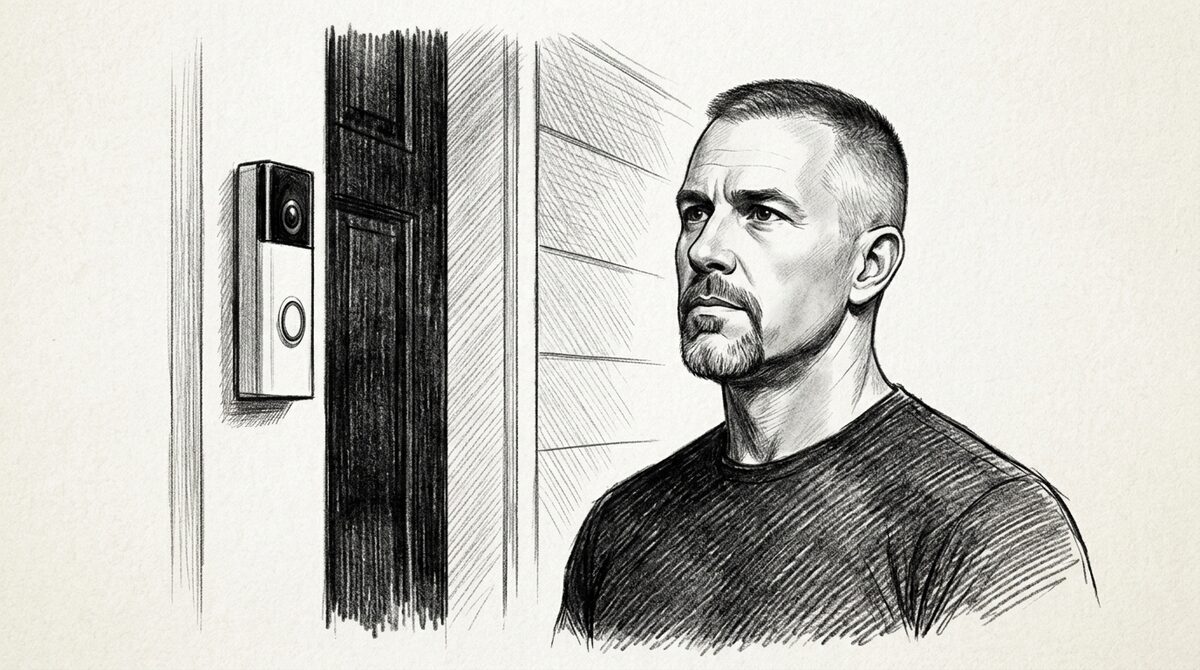
“The bouncer who knows everyone’s face before they walk through the door.”
The Front Door Is Always Open
Imagine you installed a Ring doorbell that didn’t just record video. Imagine it could see someone picking your lock from three streets away, recognize their face from a mugshot database, and lock down your smart thermostat before they even stepped inside. That is the promise of modern cybersecurity. It’s not just about building a taller fence; it’s about having a bouncer who knows everyone’s face before they walk through the club door.
We live in a world where our digital front door is rarely closed. We hand over our keys every time we log into a bank account, stream a movie, or check email. The problem is that the people trying to break in aren’t using lockpicks anymore. They are using scripts, bots, and automated tools that move faster than a human security guard can blink.
The Scale of the Exposure
“Every smart device is a new window into your life.”
The numbers behind this exposure are staggering. A 2025 study published in the Proceedings of the 3rd International Conference on Sustainable Computing and Data Communication Systems found that more than 61% of industry and social interactions now happen online. Think about that for a second. More than half of everything you do for work and play is happening in a space where a stranger can theoretically watch, copy, or steal.
This isn’t just about credit card numbers sitting in a spreadsheet. It’s about your identity, your location history, and your private conversations. As the researchers noted, the rapid development of interconnected devices has made cybersecurity increasingly complicated. When your fridge talks to your phone, and your phone talks to your car, you have created a network of entry points. Every smart device is a new window into your life, and not all of them are locked tight.
The AI Bouncer
So, how do we keep up? We hand the keys to Artificial Intelligence. Traditional security tools are like a static alarm system; they scream when a window breaks, but only after the damage is done. AI-driven security is different. It’s more like the algorithm that powers Spotify’s recommendation engine, but instead of finding you new music, it’s looking for patterns that sound like a hack.
The same study highlighted that AI has the ability to identify threats in real time and also to automatically address the security breaches. This means the system doesn’t just flag a weird email for you to read; it quarantines it before you click. It analyzes vast amounts of data to spot hidden patterns that cause a cyber-attack, much like how Netflix knows you’re going to binge a show before you even press play. By applying these algorithms, organizations can find anomalies in network traffic that human eyes would miss entirely.
Artificial Intelligence algorithms are also important as they protect from dangers that are occurring in current digital era as they can easily respond to new threats and handle multiple attacks at once.
The Black Box Problem
However, there is a catch. These AI systems are powerful, but they are also opaque. Many cybersecurity systems which are AI-based function as “black boxes,” which makes it difficult to understand how security decisions are made. You know how sometimes your phone autocorrects a word and you have no idea why? Now imagine that happening with your bank account.
If an AI locks you out of your account because it thinks you’re a hacker, but it can’t explain why, that creates a trust issue. Regulatory frameworks require clearer and easily understandable explanations. Without transparency, it is hard to verify AI-driven reports. If the system makes a mistake — a false positive — it could lock a legitimate user out. If it misses a threat — a false negative — it leaves the door open. This lack of explainability is a major hurdle for widespread adoption, especially in regulated industries where you need to know exactly why a decision was made.
The Smart Home Trap
“The doormat didn’t come with a lock.”
Then there is the hardware itself. The Internet of Things (IoT) is a rapidly growing technology designed to interconnect billions of computing devices, but it comes with a security tax. The researchers pointed out that most IoT devices lack proper mechanisms of encryption and authentication. Your smart bulb or voice assistant might not have the processing power to run heavy security software.
These vulnerabilities leave IoT devices wide open to hackers, making data breaches and unauthorized access more likely. It’s like having a high-tech vault for your money but leaving the back door of the house unlocked because the doormat didn’t come with a lock. Enhancing security architectures and real-time monitoring is crucial for minimizing risks, but it requires energy and infrastructure that many small devices simply don’t have.
What this means for you
- Expect friction: As AI security gets smarter, you might face more verification steps. Your digital bouncer is trying to be sure it’s really you, not a deepfake.
- Check your devices: Smart home gadgets are often the weakest link. Update firmware and change default passwords immediately.
- Trust but verify: Even with AI, don’t click suspicious links. The algorithm helps, but human judgment is still the final layer of defense.
Sources & Fact-Check Trail
Primary research: Artificial Intelligence for Cybersecurity: Emerging Techniques, Challenges, and Future Trends — full paper on file.
Two findings cited in this article: 1) More than 61% of industry and social interactions happen online. 2) AI systems function as “black boxes” making it difficult to understand security decisions.
Web-verified facts: None — article is grounded entirely in the cited research paper.
About the Author
Michael Komorous is the host of Voice for Valor, a podcast dedicated to sharing the stories of military veterans, first responders, and their families. A combat-rated Air Force officer, Mike served as a nuclear missile operator, C-17 pilot, and MQ-1 Predator pilot before managing rated personnel across the Air National Guard. His policy career spans legislative affairs, defense acquisitions, and geopolitical strategy at OSD Policy, including analysis of the war in Ukraine.
Today Mike builds AI systems and leads Alpha Zulu Solutions, a service-disabled veteran-owned small business focused on defense technology and government contracting. He studies advanced analytics and is a research professor at George Mason University.
Watch the podcast on YouTube | Visit voiceforvalor.com | Connect on Facebook