
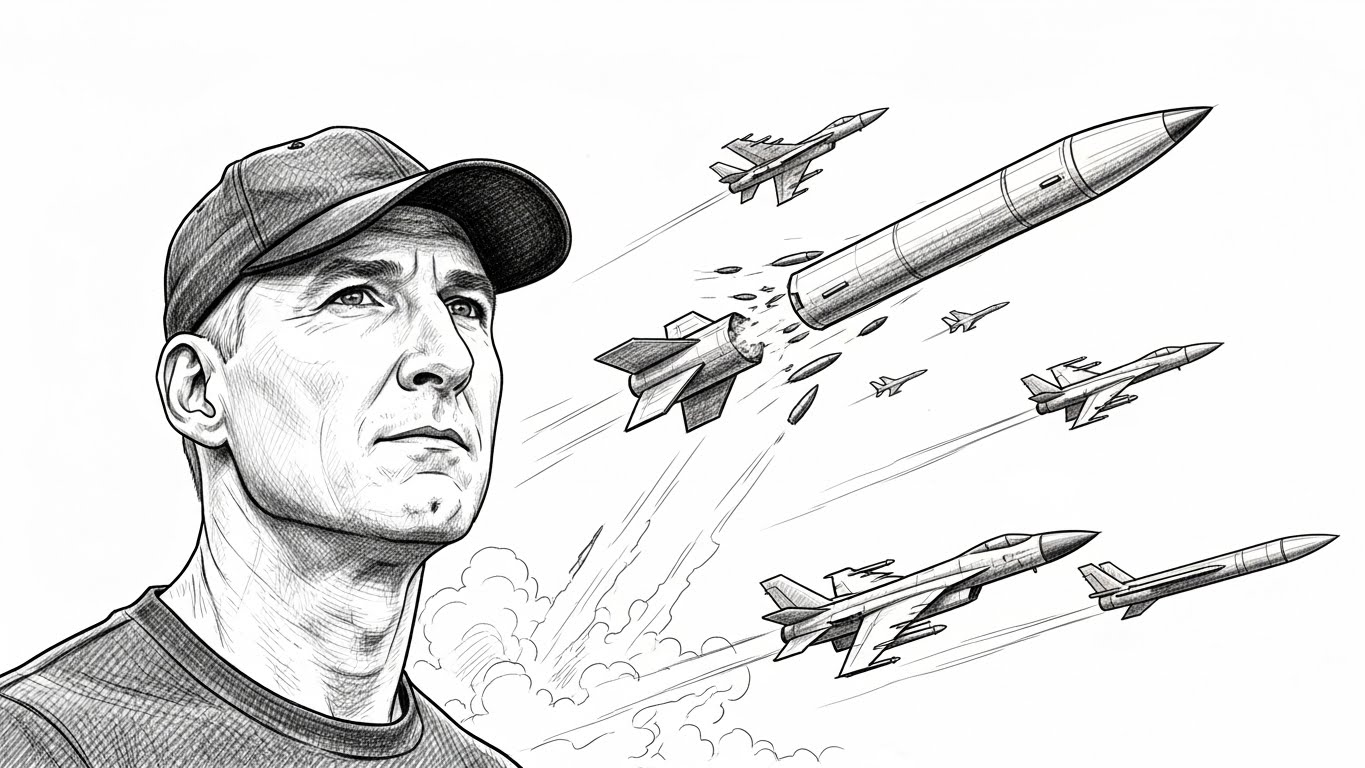
I have sat in the back of a C-17, watched the moon rise over a desert that didn’t care about our politics, and I have stared at a grainy thermal feed from an MQ-1 Predator as a target became a plume of smoke. I have analyzed policy in OSD and flown into the teeth of chaos. If there is one thing I have learned from the dust of Afghanistan to the fog of Iraq and now the smoke of Iran, it is this: We speak in one language, and the enemy speaks in another.
Today is Day 25 of Operation Epic Fury. The official narrative, delivered with the sharp confidence of Secretary Hegseth and the strategic optimism of the Commander-in-Chief, tells a story of surgical precision. We are told this is not a quagmire. We are told this is not nation-building. We are told we are conducting a high-tempo, laser-focused campaign of decisive air and maritime dominance. We have struck 7,000+ targets. The timeline? Eight weeks. A clean, decisive end.
Thanks for reading! Subscribe for free to receive new posts and support my work.
But if you look past the press releases and the “productive conversations” with Iran that the administration claims are happening, you see a different movie. You see a war of attrition where the script has flipped. We are fighting a war of targets; they are fighting a war of survival. And at Day 25, the tension between what we say we are doing and what is actually happening is not just a discrepancy — it is a fatal flaw in our strategic vision.
The Illusion of Control: When the Narrative Breaks From Reality
Let’s look at the facts the administration wants to highlight. Hegseth says the war is “decisive.” The President says he is having “productive conversations,” even postponing strikes on power plants for five days to test the waters. The message is clear: We are the masters of the tempo. We decide when the lights go out. We decide when the talks start.
But the reality on the ground in Tehran and the skies over the Gulf tells a different story. Iran has denied any talks occurred, dismissing the President’s claims as “fake news” designed to manipulate oil markets. While we sit in our command centers planning a five-day pause, Iran is firing. On Tuesday, they launched a barrage at Tel Aviv, hitting four sites and injuring six. They have replaced their killed security chief, Larijani, within days. This is not a decapitation strike; this is a mosaic defense. You can cut off the head, but if the body is a decentralized network of 31 independent commands, the head grows back before the ambulance even leaves the parking lot.
The numbers are not lying, even if the narrative is. 82,000 civilian structures damaged or destroyed. Bahrain intercepting 153 missiles and 301 drones. The Strait of Hormuz remains effectively closed, with oil at $126. These are not the metrics of a “decisive” campaign. These are the metrics of a grinding, expensive stalemate. As Hegseth himself admitted, we cannot stop everything Iran fires. If the shield is porous, the sword is useless.
Pattern Recognition: Afghanistan Is Not Ancient History
I have seen this movie before. In Afghanistan, we were told we had the Taliban on the ropes. We won every tactical engagement. We destroyed their camps. We hit their leaders. But we lost the war because we were fighting a war of attrition while they were fighting a war of endurance. They measured success by how long they could survive; we measured success by how many targets we destroyed.
Day 25 of the Iran conflict shows the same pattern. We are measuring success by the 7,000 targets struck. They are measuring success by the time they have survived the first month. We are counting bodies and buildings; they are counting days.
Consider the timeline. Hegseth says eight weeks. At Day 25, with no off-ramp in sight and no cessation of fire, that timeline is already looking like a fantasy. The CNN analysis that we are “fighting two different wars” is the most accurate strategic assessment I have heard in years. We are fighting a war of destruction; they are fighting a war of existential defiance. To them, a ceasefire is not a peace treaty; it is just a pause before the next attack. They see this as a fight for their regime’s survival, and when a regime fights for survival, it does not negotiate — it endures.
The Cost of the Mismatch: When Allies Start Bleeding
The cost of this mismatch is already being paid. Regional allies like Bahrain are being drawn in, intercepting missiles and drones, becoming targets themselves. The “laser-focused” campaign is spreading, not contracting. The “decisive” operation is becoming a quagmire of its own making.
Iran’s mosaic defense — 31 decentralized commands, one per province — was built specifically by studying American failures in Afghanistan and Iraq. Their foreign minister said it plainly: “We’ve had two decades to study defeats of the US military to our immediate east and west. We’ve incorporated lessons accordingly.” They watched us spend $2 trillion in Afghanistan only to see the Taliban retake the country in 11 days. They learned the lesson we refused to learn ourselves.
We are in a situation where the artifact of our strategy — the 8-week timeline, the 7,000 targets, the “decisive” language — is failing to match the reality of the conflict. CNN’s own data shows strike frequency is not increasing despite Hegseth’s claims of “high tempo.” The rhetoric is outpacing the results.
The Question That Haunts Every Veteran Who’s Watched This Before
So where do we go from here? The administration says “productive conversations.” The enemy says “fake news.” We say “8 weeks.” They say “we will survive.”
The pattern is clear: We are winning the battles, but we are losing the war. We are counting targets while they count days. We are measuring success by what we destroy, while they measure success by what they endure.
As a veteran who has seen the dust settle on too many conflicts, I have to ask: If we are already at Day 25 with no off-ramp, no ceasefire, and a regional alliance crumbling, what is the actual endgame? And when do we stop selling the American public a victory that is already slipping through our fingers?
The answer, I fear, is that we won’t stop until reality forces us to admit the truth. But by then, it will be too late to fix the strategy. The pattern is Afghanistan. The pattern is Iraq. The only difference is that this time, the Strait of Hormuz is closed and the whole world is paying for it at the pump.
What This Means for You
If you’re a veteran watching this unfold, you recognize the pattern. The language of “decisive operations” masking the reality of escalation. The timeline that stretches. The metrics that measure the wrong things. This isn’t pessimism — it’s pattern recognition earned the hard way.
If you’re a civilian, pay attention to the gap between the press briefing and the price of gas. That gap is the story. And right now, it’s getting wider every day.
About the Author
Michael Komorous is the host of Voice for Valor, a podcast dedicated to sharing the stories of military veterans, first responders, and their families. A combat-rated Air Force officer, Mike served as a nuclear missile operator, C-17 pilot, and MQ-1 Predator pilot before managing rated personnel across the Air National Guard. His policy career spans legislative affairs, defense acquisitions, and geopolitical strategy at OSD Policy, including analysis of the war in Ukraine.
Today Mike builds AI systems and leads Alpha Zulu Solutions, a service-disabled veteran-owned small business focused on defense technology and government contracting. He studies advanced analytics and is a research professor at George Mason University.
Watch the podcast on YouTube | Visit voiceforvalor.com | Connect on Faceboo
Thanks for reading! Subscribe for free to receive new posts and support my work.