
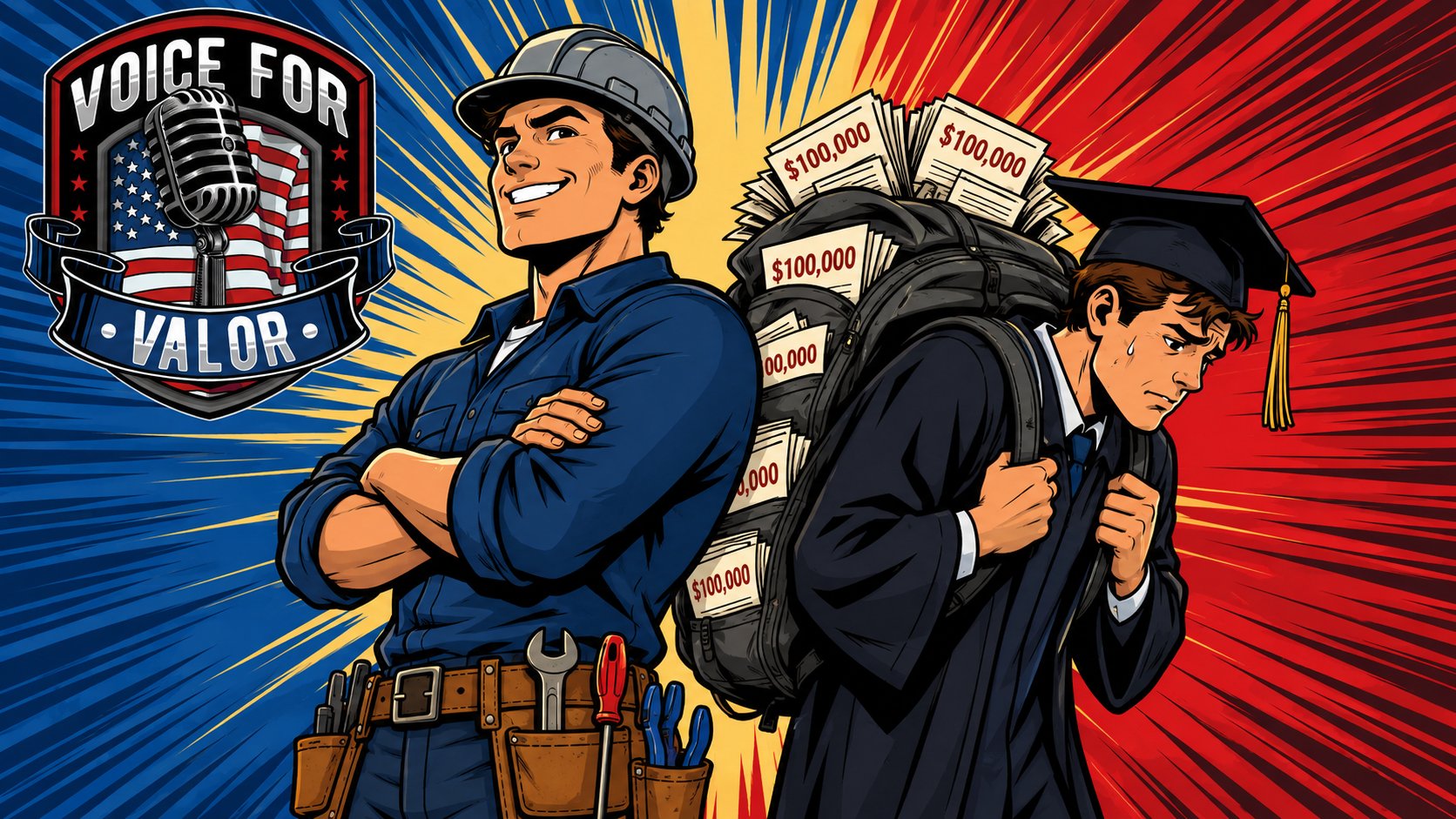
The math behind the four-year degree just broke — and AI is quietly rewriting which jobs are even safe.
The Bet That Stopped Paying Off
For about forty years, the advice was simple: go to college, get a degree, get ahead. For a long time, the math backed it up.
It doesn’t anymore.
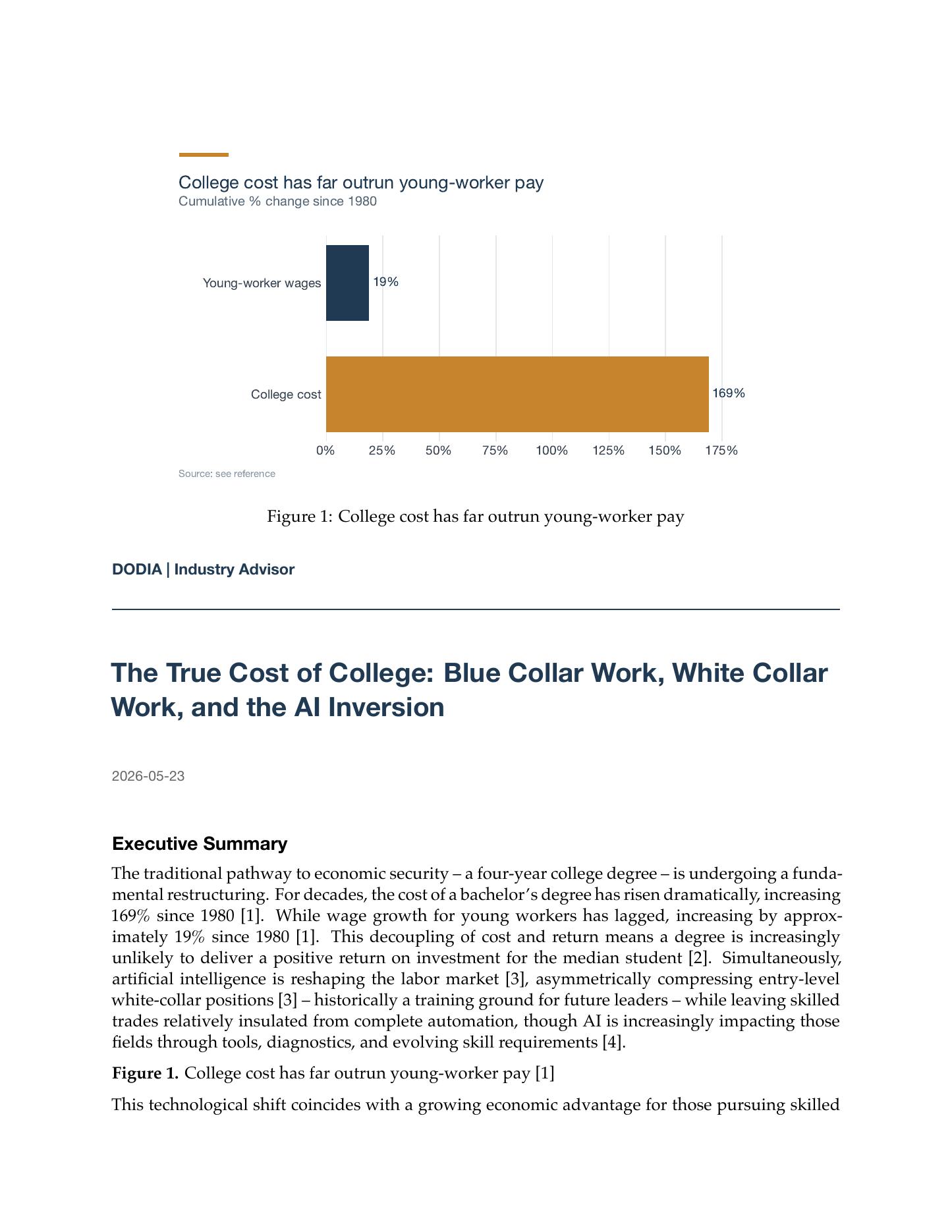
Since 1980, the cost of a four-year college degree has climbed 169%. Over that same stretch, the wages of young workers — the people actually paying off those degrees — went up about 19%. Picture two escalators side by side. One is rocketing toward the ceiling. The other is barely moving. You’re standing on the slow one, and the bill is riding the fast one.
That gap is the whole story. A degree used to be a near-guaranteed return. Now, for the median student, it’s a coin flip — and an expensive one.
The Sticker Price Is the Smallest Part
When people say college is expensive, they’re usually picturing tuition. But tuition is just the part you can see — like the price on a car window before they add in financing, fees, and the four years you spent not earning money.
The real cost has three layers most families never add up:
- The net price. Pell Grants used to take a real bite out of tuition; today they cover only about 30% of the cost at a public four-year school. For a family earning $30,000 or less, covering a public college would eat up nearly 93% of their income.
- The interest. A $30,000 loan at 6%, paid over ten years, quietly tacks on about $7,000 more. The loan is never just the loan.
- The years. Four years in a classroom is four years not drawing a paycheck. Economists call it “opportunity cost.” Everybody else calls it the money you didn’t make.
Add it up and a bachelor’s degree can easily run a median student north of $100,000. And here’s the part nobody puts on the brochure: roughly one in three students don’t finish within six years — or at all. They get the debt without the diploma. When several for-profit college chains collapsed between 2017 and 2022, students were left holding the bag, and $8.2 billion in taxpayer money went down with them.
AI Is Eating the Bottom Rung
Now layer on the thing nobody saw coming this fast.
For generations, the white-collar career worked like a ladder. You started at the bottom — drafting memos, doing paralegal research, reconciling junior accounts, triaging customer service — and you learned the trade by doing the grunt work. That bottom rung was the on-ramp.
Generative AI is very, very good at exactly that grunt work.
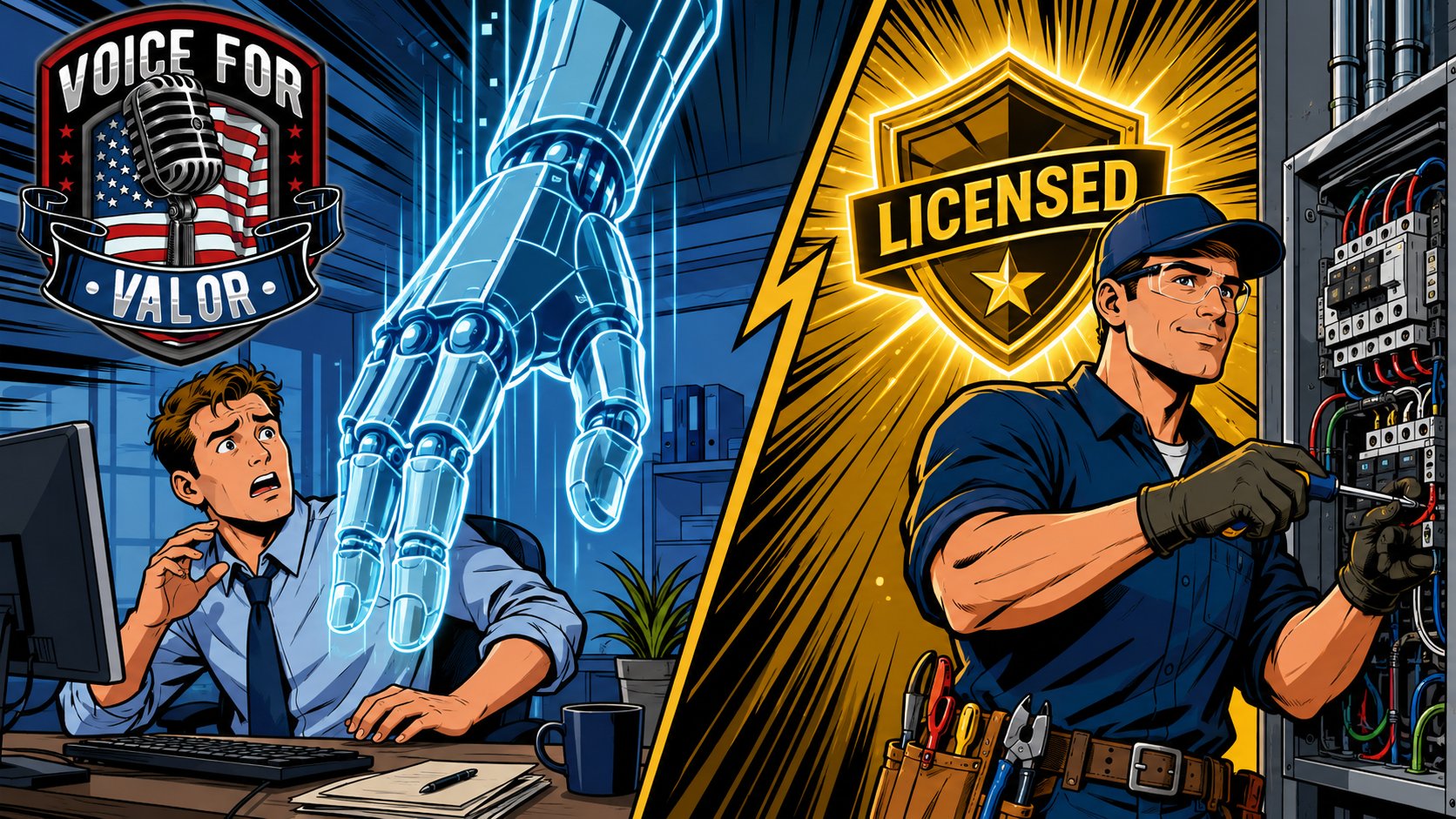
The danger isn’t just that AI does those tasks. It’s that those tasks were how people learned. Automate the bottom rung and you don’t just cut a job — you remove the step where a junior person becomes a senior one. The IMF estimates AI could affect up to 40% of jobs worldwide, and white-collar work sits squarely in the blast radius. Law firms are shrinking their associate classes. Consulting firms are hiring fewer analysts. The “junior tier” is starting to look optional.
So you can pay six figures to train for an office career — right as the entry-level version of that career is being automated out from under you.
What a Robot Still Can’t Do
Here’s the twist that flips the old advice on its head: the jobs we were told to avoid are the ones holding up best.
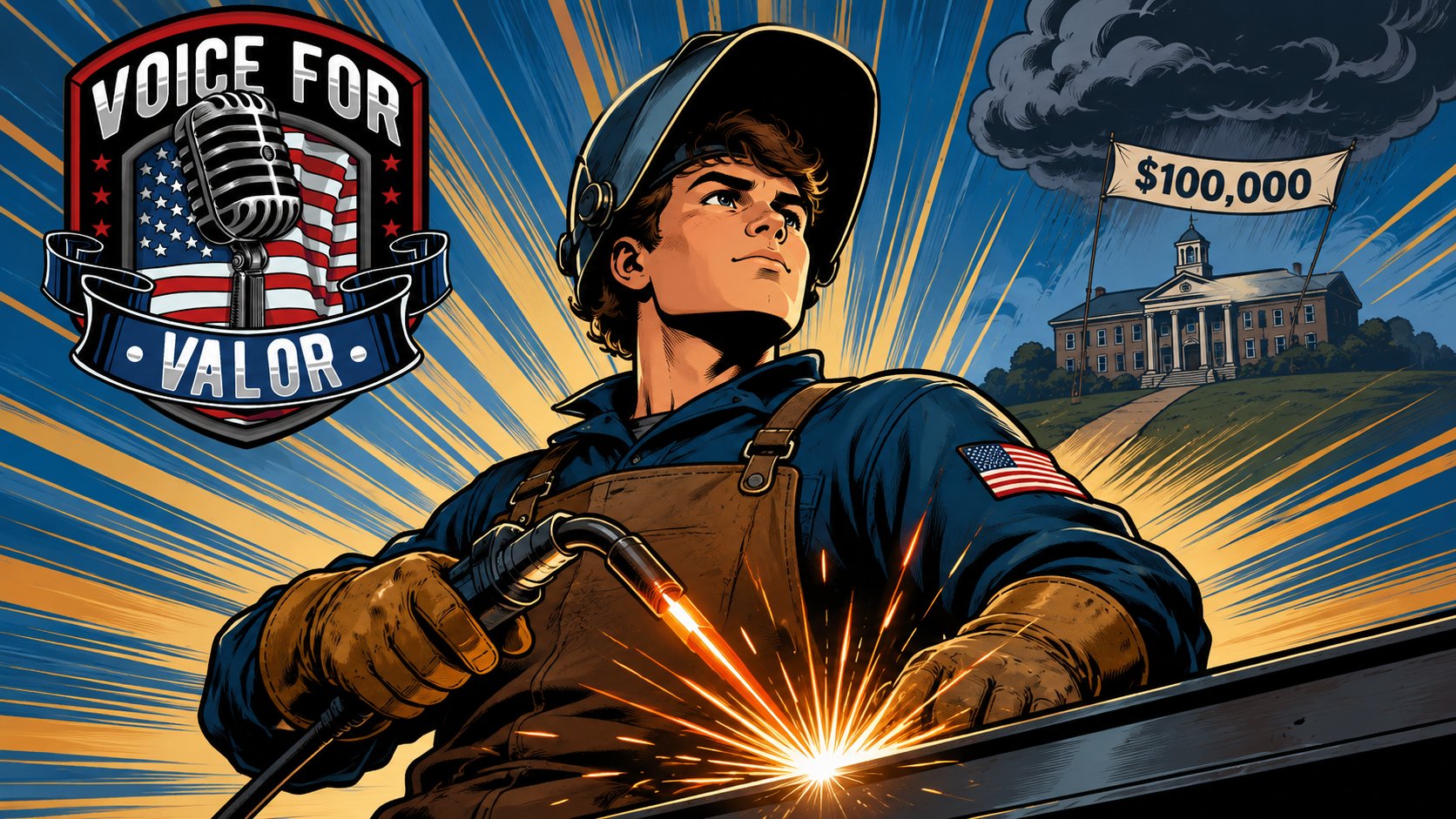
Researchers call it the “embodiment problem.” An AI can write you a flawless essay on plumbing. It cannot crawl under your sink, read a 1950s wall it’s never seen, and improvise. Skilled trades demand physical dexterity, on-the-spot judgment, and adaptation to messy, one-off conditions — exactly where today’s robots fall apart. Every old building is a different puzzle; “one size fits all” doesn’t work with a pipe wrench.
And even if a robot could do the work, there’s a wall it can’t climb: the law. State electrical and plumbing boards, OSHA, building inspectors — they all require a licensed human to sign off. A robot can’t take legal responsibility for the job. That signature is a moat.
This doesn’t mean the trades are frozen in time. AI is already making them sharper — better design software, smarter diagnostics, faster estimates. But it’s a power tool in a skilled hand, not a replacement for the hand.
Hear it from someone who lived it. In Episode 17, retired Navy Captain Shelby Mounts explains why he’s steering his own sons toward the trades — the work he believes AI and robotics will be last to replace — and how he’s building skilled-trades training pathways for veterans.
▶ Watch that part of the conversation (Ep. 17, ~51:20) → · 2-min short: Veterans vs AI — Why Blue-Collar Jobs Are the Future →
The Honest Comparison
“But degree-holders earn more!” — and on paper, they do. Median earnings run about $57,000 for a bachelor’s versus $33,500 for a high-school diploma.
That number is true and incomplete. It’s the wage before you subtract the cost of getting it.
Run the honest version. The degree-holder starts four years late, often with $100,000 in debt and a decade of payments dragging on every paycheck. The trade worker starts at 19 to 21, earning a wage during the apprenticeship instead of paying for the privilege. Once you adjust for debt and lost time, the median trades path can come out even with — or ahead of — the median non-STEM degree path.
The eye-popping degree salaries are real, but they cluster at the top: engineering, computer science, finance, elite schools. For the median student, the advantage is a lot thinner than the brochure suggests. There’s even a name now for people with real skills and no diploma: STARs — Skilled Through Alternative Routes.
Why Everyone Still Says “Just Go to College”
If the math has shifted this much, why is the advice stuck?
Because the system is wired to keep saying it. High-school guidance counselors are often graded on how many students they send to college — so the scoreboard rewards pushing everyone toward a degree, fit or not. Parents picture a four-year school as the natural next step, because it was for them. And employers slap “bachelor’s required” on jobs that don’t need one, using the diploma as a lazy filter for “probably a safe hire.”
Then there’s the quiet feedback loop in the money itself: for every dollar the federal government pumps into student loans, colleges raise their prices by about 60 cents. The aid meant to make college affordable helps make it more expensive. Round and round it goes.
How to Actually Decide
This isn’t “college is a scam.” For plenty of paths, a degree is still exactly right. It’s that the decision now requires actual thinking instead of autopilot. A simple framework:
- Start with the job, not the school. If your target career legally requires a credential — engineer, CPA, lawyer, doctor — then the degree is the path. Go.
- If the target is “office work,” look hard at the AI exposure. Routine desk roles are the most automatable. Ask whether the entry-level version of that job will even exist in five years.
- Run the debt-adjusted math. Compare the median outcome of a degree versus a paid apprenticeship — total cost (with debt and interest), time to first paycheck, and realistic earnings. Use median, not the dream salary.
- Don’t ignore geography. Trade wages swing hard by region; degree jobs may require relocating. Factor both in.
- Remember it’s not permanent. The “one job for life” era is over. Treat the choice as your first move, not your last.
What this means for you
- The default advice is out of date. “Go to college” was great guidance in 1995. In 2026 it’s a question, not an answer — and the people giving it are often paid to give it.
- Count the whole cost. Tuition plus interest plus four years of lost income. The sticker price is the smallest number on the page.
- AI changed which jobs are safe — and not how you’d expect. It’s coming for the entry-level desk job faster than the electrician’s van.
Want the deeper analysis?
I wrote a fully-charted companion paper on this — the data, the sources, and the debt-adjusted earnings model behind the argument, for anyone who wants to go past the summary.
📄 Download the full paper — The True Cost of College: Charted (PDF) →
Sources & Fact-Check Trail
- Primary source: The True Cost of College: Blue Collar Work, White Collar Work, and the AI Inversion (companion paper linked above, 2026-05-23), which compiles the figures below.
- Key data points: College cost +169% vs. young-worker wages +19% since 1980; Pell Grants now cover ~30% of public four-year cost; families earning ≤$30,000 would need ~93% of income for public college; average bachelor’s debt up ~56% from 2011–2026; ~1 in 3 students don’t finish within six years; ~$8.2B in taxpayer funds lost in the 2017–2022 for-profit college collapse; median earnings ~$57,000 (bachelor’s) vs ~$33,500 (high-school diploma) per the U.S. Bureau of Labor Statistics; IMF estimate that up to 40% of jobs globally could be affected by AI; the “$1 in federal loans → ~$0.60 cost increase” dynamic.
- Underlying references include U.S. Congressional hearing testimony and works by Scott Galloway (Adrift), David Epstein (Range), and Maximilian Kasy (The Means of Prediction).
About the Author

Michael Komorous is the host of Voice for Valor, a podcast and newsletter sharing the stories of military veterans, first responders, and their families. A combat-rated Air Force officer, Mike served as a nuclear missile operator, C-17 pilot, and MQ-1 Predator pilot before managing rated personnel across the Air National Guard. His policy career spans legislative affairs, defense acquisitions, and geopolitical strategy at OSD Policy.
Today Mike works at the intersection of national defense, technology, and AI — across three ventures:
- Voice for Valor — the podcast and newsletter you’re reading now, telling the stories behind service and sacrifice.
- DoD Industry Advisor — his defense-advisory practice, helping contractors with pre-solicitation positioning, capture strategy, and market intelligence for the Department of Defense.
- Alpha Zulu Solutions — a service-disabled veteran-owned small business (SDVOSB) delivering defense technology and supply-chain and government-contracting solutions.
He also builds AI systems and is a research professor at George Mason University.
🎙️ Watch the podcast on YouTube · Voice for Valor · DoD Industry Advisor · Alpha Zulu Solutions