
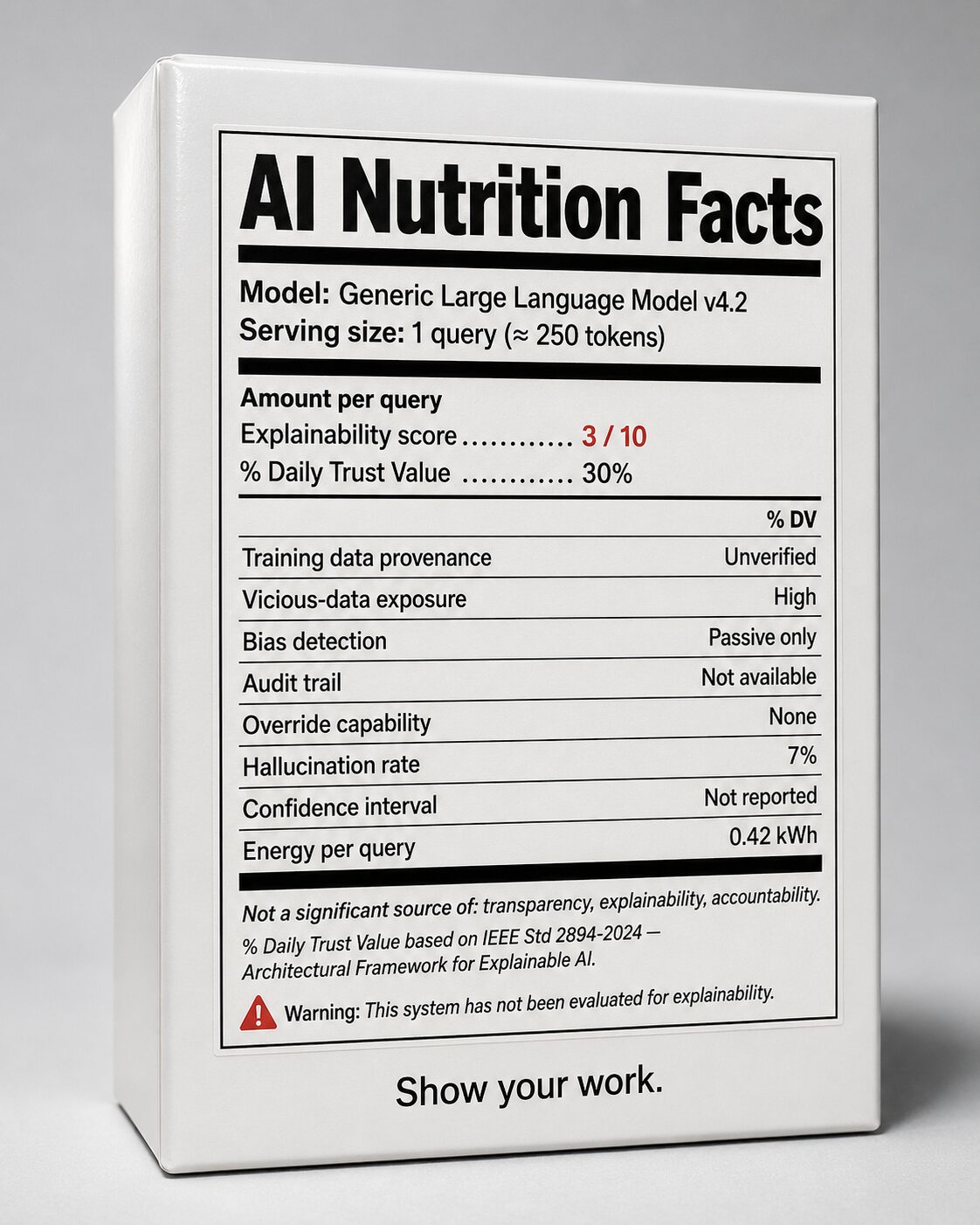
The Magic Trick Nobody Wants Anymore
Imagine your Spotify playlist suddenly starts playing heavy metal at 3 AM. You didn’t change your settings. You didn’t click a link. It just happened. For a while, you might roll with it. But then the ads start targeting things you’ve never searched for. Your food delivery app suggests a restaurant you’re allergic to. The magic trick stops feeling clever and starts feeling dangerous.
This is the current state of artificial intelligence in 2026. It works incredibly well, but it operates like a black box. We feed it data, it spits out an answer, and nobody knows exactly how it got there. It’s like handing your keys to a valet who refuses to tell you where they parked the car until you demand it back. That friction is where the trouble starts. When an algorithm makes a mistake, we need to know why so we can fix it. Without that clarity, we are flying blind.
The Risk of the Black Box
The stakes go far beyond a bad playlist recommendation. When AI systems lack explainability, they become vulnerable in ways that feel like leaving your front door unlocked. A guide published by the IEEE Computer Society, titled IEEE Guide for an Architectural Framework for Explainable Artificial Intelligence (Std 2894-2024), lays out the danger clearly. The document argues that the loss of explainability during the transition to advanced machine learning creates specific risks.
“The loss of explainability during this transition, however, means vulnerability to vicious data, poor model structure design, and suspicion of stakeholders and the general public.”
That phrase “vicious data” is critical. Think of it like poisoned ingredients in a recipe. If you don’t know how the dish is cooked, you can’t spot the bad ingredient until you’ve already eaten it. In the digital world, this means models can be tricked by manipulated inputs, leading to poor decisions. The same guide notes that this opacity leads to suspicion among stakeholders and the general public, carrying a range of legal implications. If an AI denies your loan or flags your insurance claim, you deserve to know the “why.” Without it, trust evaporates.
The New Blueprint for Trust
So, how do we fix a system that is fundamentally opaque? We stop treating the AI as a magician and start treating it like an engineer. The IEEE guide provides a technological blueprint for building, deploying, and managing machine learning models while meeting the requirements for transparent and trustworthy AI. It’s not just about making the code readable; it’s about creating an architectural framework that forces the system to justify its moves.
This framework defines the types of XAI methods and the application scenarios to which each type applies. It’s similar to how a smart thermostat learns your schedule. You don’t need to know the code behind the temperature adjustment, but you do need to understand that it learned from you, and you need the ability to override it if it gets it wrong. The guide ensures that developers build this override capability into the foundation, not as an afterthought. It treats explainability as a performance metric, just like speed or accuracy.
Why Transparency Isn’t Optional
Some might argue that complexity is the price of power. They say if you want a smarter AI, you have to accept a dumber explanation. The committee behind this standard disagrees. They view explainable AI (XAI) as a necessary route for AI to move forward. It is considered essential for improving the trust and transparency of AI-based systems. Without it, the technology hits a ceiling where people simply stop using it because they don’t feel safe.
“XAI is a necessary route for AI to move forward — essential for improving trust and transparency of AI-based systems.”
Consider your Ring doorbell. It works because you trust it to show you who is at the door. If it started showing random faces or failed to alert you, you’d uninstall it immediately. AI systems in healthcare, finance, and defense need that same level of reliability. The guide emphasizes performance evaluation of XAI, meaning we measure how well the system explains itself, not just how well it predicts the future. If the explanation is gibberish, the prediction doesn’t matter.
What This Means for You
- Demand clarity: When interacting with AI tools, look for features that explain decisions rather than just delivering results.
- Watch for “vicious data”: Be skeptical of systems that seem to react strangely to minor inputs; they may be vulnerable to manipulation.
- Trust the framework: Support organizations that adopt standards like IEEE 2894-2024, ensuring the tech you use has a safety blueprint.
In 2026, the question is no longer whether AI can do the job. It’s whether AI can show its work. That’s where trust lives.
Sources & Fact-Check Trail
- Primary research: IEEE Std 2894-2024 — IEEE Guide for an Architectural Framework for Explainable Artificial Intelligence — full paper on file at
/mnt/deep-storage/pdf/\_inbox/2894-2024.pdf - Two findings cited in this article: (1) Loss of explainability leads to vulnerability to vicious data, poor model structure design, and suspicion of stakeholders. (2) XAI is a necessary route for AI to move forward to improve trust and transparency.
- Web-verified facts: None — article is grounded entirely in the cited IEEE standard.
About the Author
USAF retirement, February 2025 — twenty-five years across Active Duty, Reserve, and Air National Guard.
Michael Komorous is the host of Voice for Valor, a podcast dedicated to sharing the stories of military veterans, first responders, and their families. A combat-rated Air Force officer, Mike served as a nuclear missile operator, C-17 pilot, and MQ-1 Predator pilot before managing rated personnel across the Air National Guard. His policy career spans legislative affairs, defense acquisitions, and geopolitical strategy at OSD Policy, including analysis of the war in Ukraine.
Today Mike builds AI systems and leads Alpha Zulu Solutions, a service-disabled veteran-owned small business focused on defense technology and government contracting. He studies advanced analytics and is a research professor at George Mason University.
Watch the podcast on YouTube | Visit voiceforvalor.com | Connect on Facebook