
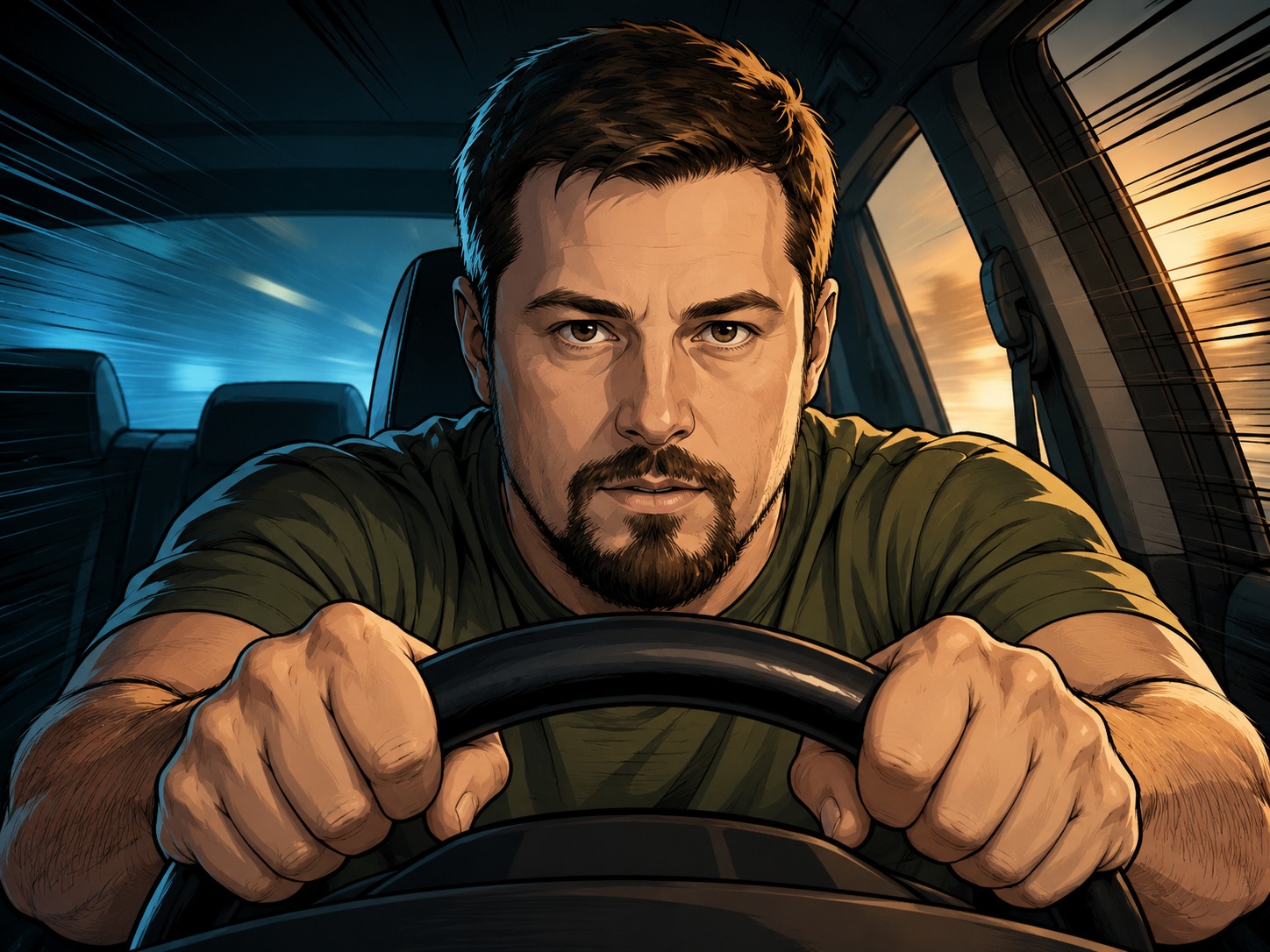
I still sit in my car and grip the steering wheel like I’m holding a joystick.
It happens without thought. The engine is off, the keys are in my pocket, and I’m parked in a lot in the middle of the day — and my hands are already locked in the position of a man about to kill, or save, or die. Knuckles white. Shoulders up. Bracing for an explosion that isn’t there.
That is the invisible scar of the drone operator. Not a shrapnel wound you can point to — a rewiring of the nervous system that turns a grocery run into a combat mission.
Tanner Yackley, an Air Force MQ-9 Reaper sensor operator who flew over a thousand combat missions, knows this better than anyone. He didn’t just watch the world from a screen in Las Vegas. He lived inside the machine until his body forgot how to be anything else.
The Boring Reality of the Trigger
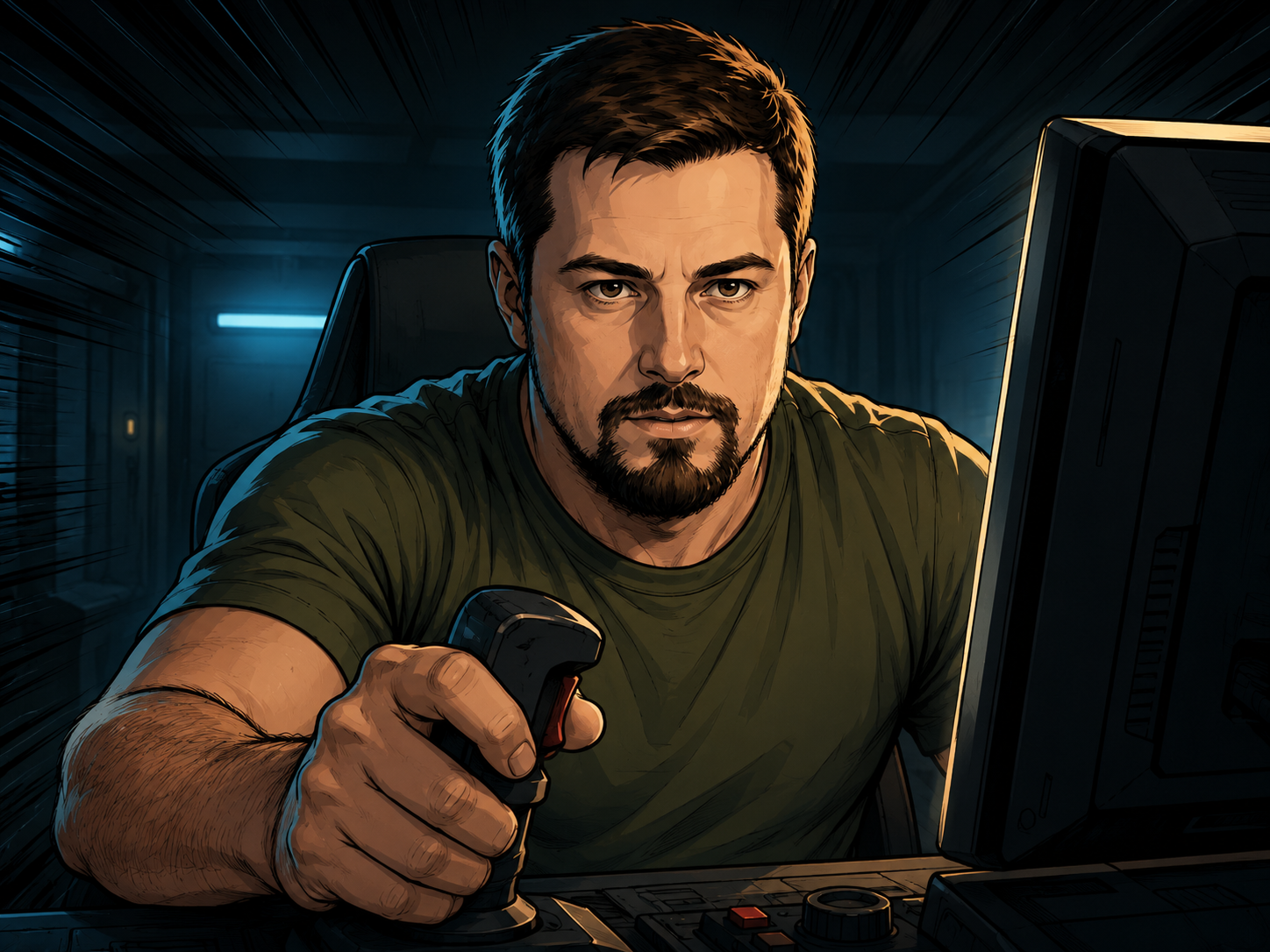
Most people picture combat as a barrage of explosions. Tanner’s war was shift work — four years of straight shifts, waking up tired, sitting down at a screen, and waiting.
Ninety-five percent of the time, the screen showed nothing happening. A man asleep on a roof. A kid playing with goats. Dry, monotonous, agonizingly quiet. But the boredom was a lie — the calm before a radio call that could come in the next second and demand a weapon on target within the minute.
That is the real torture of the work, and it has nothing to do with the kill. There were days Tanner spent eight hours in a strike posture: eight hours with a finger resting on a trigger, muscles tensed, ready to fire, waiting for a command that never came. His body was flooded with the chemicals of survival — ready to end a life or save one — and permitted to do neither. So it just held. The shift would end, the next operator would take the weapon, and the tension wouldn’t break. It would only wait for him to come back.
12:00 — the boring reality of a thousand combat missions.
The Ghost in the Hand
Tanner didn’t notice what the job had done to his body. His fiancée did.
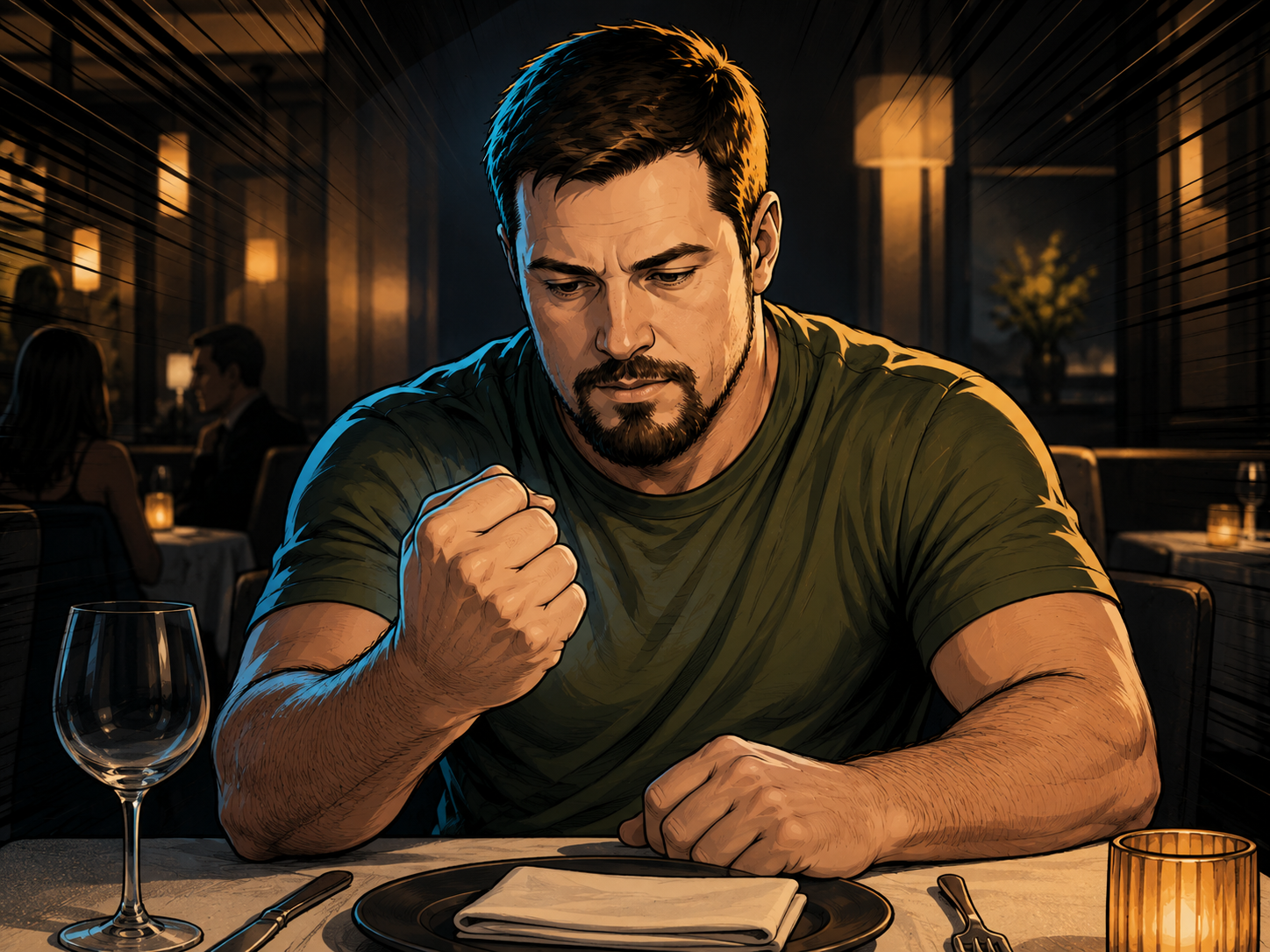
They were at dinner, early in their relationship. He was sitting at the table — forearms flat, fingers curled slightly inward — and she asked him what he was doing. Why his hands were up like that. He had no idea. He was just sitting there.
Then it landed. His hands had found the edge of the table and gripped it exactly where the console edges of his joystick had rested for years. The joystick, the zoom lever, the hard edge of the console — a physical landscape he had inhabited for thousands of hours. Without ever asking permission, his body had mapped that landscape onto the world around him. Muscle memory so deep it had bypassed his brain entirely.
A dinner table should not feel like a violation of your own humanity. That one did.
22:35 — the paradox of the finger on the trigger.
Carrying the Joystick Home
The rewiring doesn’t stay at the dinner table. In the seven years since, Tanner has spent his time talking with other operators, trying to name what the work leaves behind — and he’ll tell you he can read what a person is thinking, before they say a word, about seventy-five percent of the time. You become so attuned to micro-expressions and body language, the constant signal-reading of the battlefield, that you cannot switch it off. Every conversation starts to feel like a briefing.
That is why the joystick is the right symbol for the whole experience. Hold one long enough and you stop being a person operating a machine — you become the sensor, the trigger, an extension of the system. And when you set it down, you don’t actually set it down.
“I still sit in my car and my shoulders hunch forward, gripping the steering wheel exactly like I’m holding a joystick.”
The car becomes the cockpit. The wheel becomes the joystick. The civilian street is loud, but not in the way that matters — and the quiet underneath it is deafening, because his ears are still tuned to the frequency of the warzone.
What an Overhaul Would Mean
Tanner argues for a complete overhaul of how remote-warfare operators are cared for, and his point isn’t policy — it’s the human cost. You cannot treat the symptom and miss the wound. The body has been changed. The reflexes that kept him alive at the console are the same ones that make him a stranger at his own table.
Most people never see that price. They see the drone, the video feed, the clean line in a news report. They don’t see the drive home — the hunched shoulders, the white knuckles, the fight that is technically over and has not ended.
It hasn’t ended. It has only changed target: it is now his own nervous system. And the first honest move is to call the joystick in the driver’s seat exactly what it is. Not a metaphor — a reality, one a thousand operators carry home while almost no one is looking for it.
44:00 — muscle memory and the invisible scars.
Sources & Fact-Check Trail
This article is drawn from the Voice for Valor conversation with Tanner Yackley — watch the full episode. Narrative craft informed by the Voice for Valor writing-experts knowledge base. Names, dates, units, and figures reflect the guest’s own account; see the episode for full context.
About the Author
Michael Komorous is the host of Voice for Valor, a podcast dedicated to sharing the stories of military veterans, first responders, and their families. A combat-rated Air Force officer, Mike served as a nuclear missile operator, C-17 pilot, and MQ-1 Predator pilot before managing rated personnel across the Air National Guard. His policy career spans legislative affairs, defense acquisitions, and geopolitical strategy at OSD Policy.
Today Mike builds AI systems and leads Alpha Zulu Solutions, a service-disabled veteran-owned small business focused on defense technology and government contracting. He holds advanced credentials from MIT, Wharton, and the Eisenhower School at National Defense University.
Watch the podcast on YouTube | Visit voiceforvalor.com | Connect on Facebook