The cargo bay was packed — about twenty operators strapped into the jump seats, gear stacked between their boots. Beards. Tattooed forearms. Headphones bleeding bass through the foam. One of them had Drowning Pool cranked: let the bodies hit the floor. Eyes on books they weren’t reading. Heads back, jaws tight. Already somewhere else.
Thirty minutes into the flight, the loadmaster’s voice cracked through the headset. One of you has got to get down here and see this. There’s fumes back here. Something’s wrong. He was sitting right behind the pilots, no mask yet — just the word hanging there between them, fumes, and nobody moving. Then the boldface came out of their mouths before their bodies moved. Oxygen, one hundred percent. Electrical fire — had to be. He swapped to the bottle, yanked the mask over his face, and went for the stairs.
The bay was chaos. A soldier on his knees, yellow EPOS hood already pulled over his head — but he hadn’t activated it, hadn’t pulled the red tab, and he clawed at the bag, suffocating on every breath he took. Then his hands went slack and he pitched forward. Around him, more were down. Some vomiting. Some slumped in their seats, heads lolling. A few still up, stumbling, crashing into the bulkheads and each other like a mosh pit with no music. No smoke. No sparks. Then he saw it: fuel seeping from the sides of the vehicles, running across the slatted floor and draining into the belly of the aircraft.
It’s fuel. Troops unconscious. More going down.
We’re already in the turn. Getting lower to purge the bay.
The pilots pushed the nose over and the bottom fell out. Four hundred thousand pounds of aircraft and cargo streaking earthward at over ten thousand feet a minute. The bodies that had hit the floor were lifting off it now. The altimeter unwound so fast the numbers blurred. His body knew they were going down; his body did not know they would stop. Twelve. Eleven. Ten. The pilots pulled the nose up and the floor slammed back into his boots, hard enough to pin him. Fresh air began to purge the fumes. They’re coming around, the load said. All conscious. Breathing.
They landed at night, fire trucks and ambulances strobing off the wet concrete. Every operator walked off that aircraft — white-faced, unsteady, some still holding their hoods. One stopped at the bottom of the ramp, put his hands on his knees, and just breathed. When the crew pried up the floor panels, the insulation beneath was soaked black with jet fuel, still wicking through the fibers. One spark — one tie-down, one arc, one piece of metal scraping metal — and they would have been a fireball over the Atlantic.
He stood on the tarmac while the crews started their assessment. His hands were steady. His voice was calm. He signed the forms an aircraft commander signs when the crew is alive and the paperwork begins. The maintenance officer was talking — grounded, insulation, three or four days — and the words arrived from another frequency, static and distant. The ambulance lights pulsed, white and red, white and red, each one landing on his retinas a half-second late.
Then something gave behind his sternum. Not pain — hairline, in the thing that holds everything in place. His hands began to shake. The tarmac tilted under his boots. The fuel in his hair thickened into a smell that had nothing to do with JP-8 — older, further back — and the night air pressed against his face, and he could not feel it.
That was the moment the world split in two: the before, when we were just men with a job to do, and the after, when we were the ones who stayed.
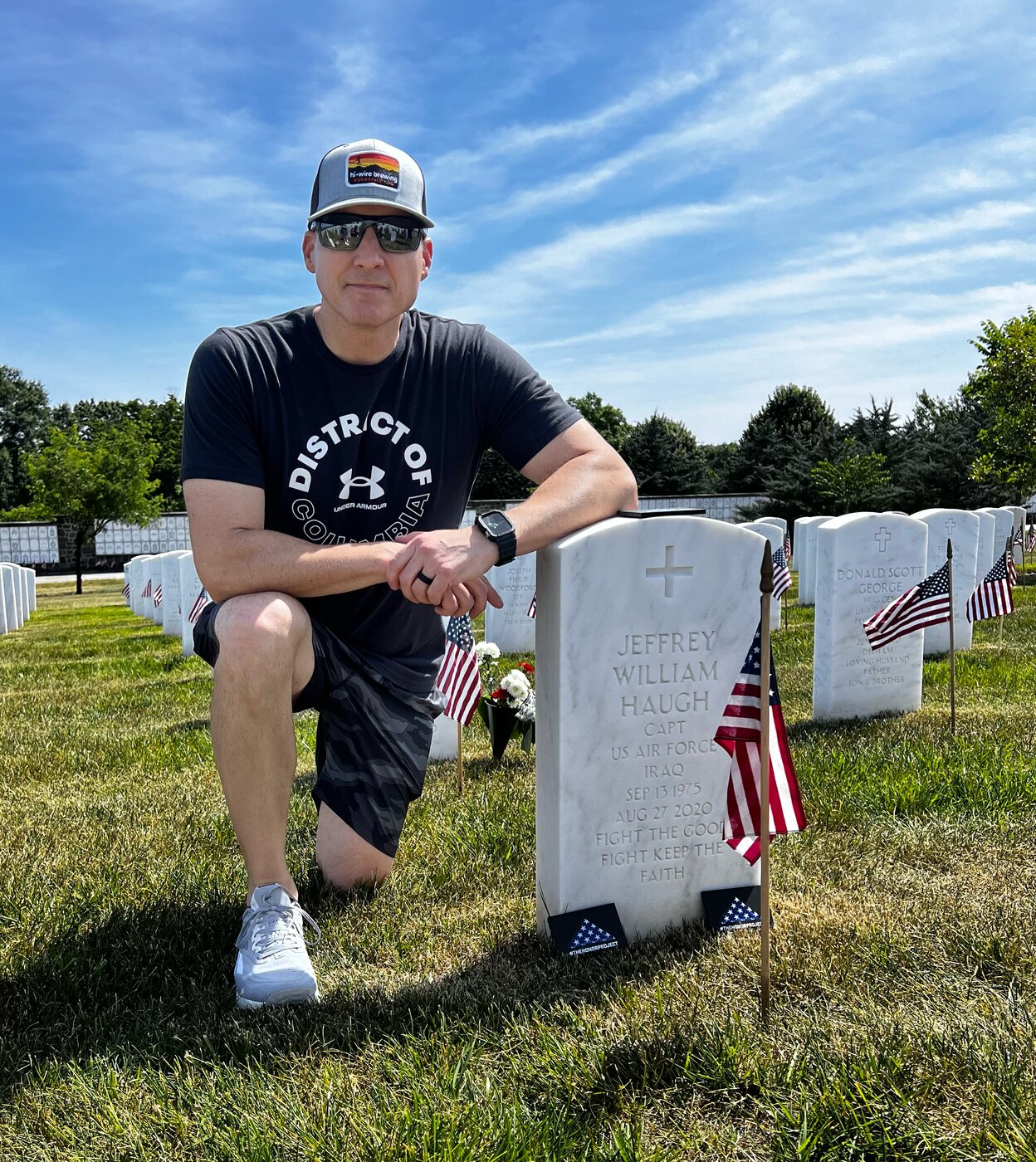
Seventeen years later, I am standing in a different kind of silence. Not the static of an emergency, but the heavy, expectant quiet of a VA National Cemetery. I came to find a name.
Jeff wasn’t a crewmate or a wingman. Jeffrey William Haugh was a friend from childhood — someone I grew up with, who put on the Air Force uniform and served in Iraq. He didn’t fall in the fight. He made it home, and then cancer took him. But the headstone is the same shape as all the others, and the flag planted in front of it is the same flag. His is the name I come to find.
That is what the VA is asking us to do this week.
According to VA News, the Department is inviting Veterans, their families, caregivers, survivors, and the public to honor fallen service members by attending Memorial Day ceremonies at VA National Cemeteries across the country. They want us to go. They want us to stand where the grass is cut short and the flags are straight.
I know the hesitation, because I have felt it — the flinch when someone who only ever knew the calm version of you claps you on the back, tells you that you look great, and you smile and agree, because the alternative is trying to explain the hairline crack behind your sternum that never fully set. We wear the scars of those who went before us. We also wear the scars of the ones who didn’t come back.
“We enter as civilians seeking direction. We emerge as warriors who’ve found their purpose, but we never leave the graveyard behind.”
The VA keeps a running list of these ceremonies — cemetery by cemetery, town by town, updated as Memorial Day approaches. But the list is just a map. The territory is the grief.
When I think of my grandfather, I see the Navy. A sailor aboard the USS North Carolina — the battleship in the old photographs, the gray steel and the open water. He came home from his service, grew old, and went the way we hope the lucky ones do: in time, of age, after a full life. But the loss is no smaller for being gentle. It is still a hole in the floor of the house, and it stays there long after the person is gone. When I stand at a grave, I am not performing bravery. I am standing in that hole.
The VA’s Office of Research and Development has long noted that the burden of service doesn’t end when the uniform comes off. It changes shape. Sometimes it’s the weight of a flag. Sometimes it’s the silence in the kitchen. Sometimes it’s the guilt of being the one who made it home while others didn’t.
There is a temptation to treat Memorial Day as a day off. To play golf. To stuff our faces at a BBQ. To ignore the dead so we don’t have to face the living. But the VA is right to invite us back. Not because they need a photo op, but because we need the ground. We need the place where the names are carved in stone and the truth is simple: someone is gone.
At the ceremony, the bugle sounds. It cuts through the noise of the traffic, the chatter, the modern world. It’s the same sound that played at my grandfather’s station, the same sound that played at my own graduation from OTS. The bonds forged through shared suffering and triumph had outlasted all the screaming, all the doubt. We entered as civilians. We emerged as warriors. But we never left the graveyard behind.
Those unable to attend in person can still honor a fallen service member by leaving a tribute on the Veterans Legacy Memorial site, where over 10 million Veterans are remembered. But there is no substitute for the cold wind, the weight of the flag, and the silence that follows the last note.
If you are standing there today, or if you are reading this and feeling the pull to go, know this: you are not alone in the silence. You are not broken for feeling it. You are the one who stayed, and that is a heavy, holy thing.
If the silence is too heavy
Memorial Day can press hard on the ones who came home. If grief is turning into something darker — if you are thinking about ending your life, or you are worried about someone who is — reach out now. You do not have to be enrolled in VA benefits, and you do not have to be in crisis to call.
Veterans Crisis Line — free, confidential, 24/7 Call 988, then press 1 • Text 838255 • Chat at VeteransCrisisLine.net
For anyone, veteran or not: the 988 Suicide & Crisis Lifeline is reachable by call or text at 988.
You are the one who stayed. Staying is allowed to be hard. Let someone stand in the silence with you.
Watch — Take Care of Each Other: Our Lives Depend on It (3:58, Voice for Valor).
If this is you
- Go to the VA National Cemetery website (www.cem.va.gov) or call 1-800-827-1000 to find a ceremony near you, or to submit a pre-need burial eligibility application if you are thinking ahead.
- Leave a physical tribute at a grave today. Even if it’s just a flower or a note, the act of placing something there breaks the isolation of grief.
- Reframe the day: It is not about “celebrating” death; it is about witnessing the cost of freedom and honoring the specific, messy humanity of the person who is gone.
Sources & Fact-Check Trail
This reflection is occasioned by the VA’s Memorial Day observances announcement — Memorial Day observances and events across the nation, VA News. VA program details (National Cemeteries, the Veterans Legacy Memorial honoring more than 10 million Veterans, and burial-benefits line 1-800-827-1000) reflect Department of Veterans Affairs sources. The opening account is drawn from the author’s own service history; it is condensed from the prologue of his forthcoming memoir.
About the Author
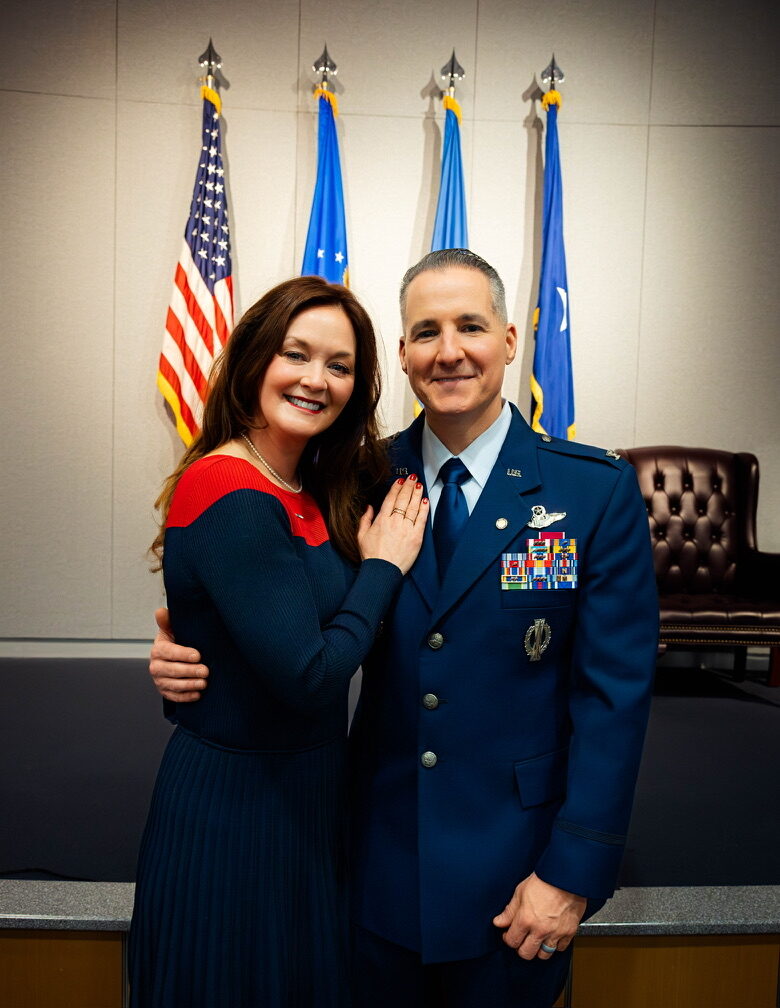
Michael Komorous is the host of Voice for Valor, a podcast and newsletter sharing the stories of military veterans, first responders, and their families. A combat-rated Air Force officer, Mike served as a nuclear missile operator, C-17 pilot, and MQ-1 Predator pilot before managing rated personnel across the Air National Guard. His policy career spans legislative affairs, defense acquisitions, and geopolitical strategy at OSD Policy.
Today Mike works at the intersection of national defense, technology, and AI — across three ventures:
- Voice for Valor — the podcast and newsletter you’re reading now, telling the stories behind service and sacrifice.
- DoD Industry Advisor — his defense-advisory practice, helping contractors with pre-solicitation positioning, capture strategy, and market intelligence for the Department of Defense.
- Alpha Zulu Solutions — a service-disabled veteran-owned small business (SDVOSB) delivering defense technology and supply-chain and government-contracting solutions.
He also builds AI systems and is a research professor at George Mason University’s Innovation Lab.
🎙️ Watch the podcast on YouTube · Voice for Valor · DoD Industry Advisor · Alpha Zulu Solutions